
Views: 0 Author: Site Editor Publish Time: 2026-09-25 Origin: Site


Does dust crash your factory computers? Picture a common scenario on the shop floor. You deploy a standard desktop workstation near a high-speed CNC machining center. Within weeks, airborne metallic dust and coolant mist bypass the flimsy plastic casing. This debris heavily coats the delicate motherboard. The internal fan whines as it struggles to cool the system. The processor rapidly overheats, and the computer abruptly shuts down. A single hardware failure like this causes costly operational downtime. It halts the entire production line and leads to irrecoverable data loss.
Standard commercial hardware simply fails fast in harsh conditions. Enterprise facilities must turn to purpose-built architecture to solve this problem entirely. Industrial computers provide the ultimate safeguard against environmental extremes. In this comprehensive guide, you will learn their exact definition, core engineering features, real-world applications, and the strict validation standards they must pass before deployment.
Built for Extremes: Engineers specifically design these machines to operate reliably in unforgiving environments. They feature validated resistance to extreme temperature fluctuations, moisture, airborne particulate matter, and heavy mechanical vibrations.
Long-Term Reliability: Commercial desktop computers become obsolete quickly. Ruggedized systems offer extended product lifecycles. They typically maintain a static bill of materials for five to ten years. This ensures long-term hardware consistency for massive enterprise rollouts.
Versatile Applications: These robust devices power the critical data backbone of modern operations. You will find them everywhere from automated factory floors and robotic assembly lines to smart logistics and remote healthcare.
Strict Standards: True industrial computing hardware never relies on marketing claims. Rigorous third-party certifications validate their endurance. Buyers should always verify specific Ingress Protection ratings, National Electrical Manufacturers Association standards, and military-grade testing protocols.
An Industrial PC is a robust, ruggedized computing platform designed specifically for commercial and enterprise deployment rather than everyday consumer use. These machines share the same fundamental internal architecture as standard desktop computers, utilizing microprocessors, memory, and storage drives. However, their physical construction and component selection are vastly different. Manufacturers build them to process critical production data continuously around the clock in environments where standard electronics would rapidly degrade, corrode, or fail entirely.
Understanding the distinction between industrial and commercial computing requires looking far beyond basic processing speed. You must focus heavily on operational endurance. The fundamental differences lie in build quality, lifecycle management, and thermal regulation.
Commercial computers are inherently designed for climate-controlled, pristine offices. They utilize lightweight plastic or thin sheet-metal chassis. They also rely heavily on internal fans for active cooling. Furthermore, rapid obsolescence drives the consumer electronics market. Manufacturers swap out commercial computer components every six to twelve months.
In contrast, industrial computers utilize heavy-duty steel or extruded aluminum enclosures designed to take a physical beating. They prioritize a static bill of materials. This crucial feature means the exact motherboard, processor, and memory configuration remains available for years. Consequently, enterprises avoid debilitating software incompatibility issues when they need to replace a unit or scale their hardware infrastructure five years down the line.
Feature | Commercial Desktop | Industrial Computer |
|---|---|---|
Enclosure Material | Lightweight plastic or thin sheet metal | Heavy-duty steel or extruded aluminum |
Cooling System | Active mechanical fans highly susceptible to dust | Fanless passive cooling via heavy thermal heat sinks |
Component Lifespan | 1 to 2 years before market obsolescence | 5 to 10 years with guaranteed component availability |
Mounting Options | Freestanding desk tower | DIN rail, VESA mount, rackmount, or panel integration |
Operating Temperature | Climate-controlled office environments only | Extreme ranges from freezing facilities to smelting plants |
The resilience of rugged computing hardware is not an accident. It is the direct result of deliberate, specialized engineering choices. Engineers meticulously select every individual component to mitigate specific environmental risks. This ensures the machine remains virtually indestructible out in the field.
Dust and particulate ingress rank among the leading causes of computer failure. Standard computers use fans to draw cool air in. This inadvertently acts like a vacuum, sucking in dust, textile fibers, and conductive metal shavings. Over time, this debris blankets the internal components. It causes short circuits and catastrophic overheating.
To combat this, manufacturers typically utilize a completely fanless design. Instead of moving air, these systems rely on advanced thermodynamics for passive cooling. The external chassis features heavy aluminum fins that act as a giant, highly efficient heat sink. Heat generated by the internal processor transfers directly to this chassis via copper heat pipes and thermally conductive pads. The heat then dissipates harmlessly into the surrounding ambient air. By eliminating the mechanical fan, engineers can completely seal the computer. This prevents any foreign contaminants from entering the system. When configuring robust automated setups, system integrators often rely on specialized Industrial PCs to handle continuous processing without thermal throttling.
Manufacturing and transportation settings subject hardware to continuous mechanical vibration and sudden kinetic shocks. A standard desktop contains numerous delicate internal cables and spinning hard disk drives. These easily vibrate loose or crash when subjected to physical stress.
Industrial systems utilize brilliant cableless internal designs. Critical components are soldered directly onto the printed circuit board or connected via secure locking pin headers. Furthermore, they exclusively leverage solid-state drives for data storage, which contain absolutely no moving parts. In the most rugged models, rubber dampeners shock-mount the entire motherboard within the heavy-duty enclosure. This allows the system to absorb severe kinetic energy, like the rumble of a diesel locomotive, without interrupting data processing.
The internal silicon of these machines fundamentally differs from commercial electronics. Manufacturers build industrial-grade motherboards with thicker circuit board layers to prevent warping under intense thermal stress. They utilize solid capacitors and specialized memory modules explicitly designed to function flawlessly across wide temperature ranges. A standard office desktop might crash if the room reaches hot summer temperatures. Conversely, a wide-temperature computing unit boots up seamlessly in a freezing meat-packing facility or operates continuously next to a steel smelting furnace.
Industrial environments vary wildly from offshore oil rigs to sterile pharmaceutical labs. Consequently, manufacturers produce this hardware in several distinct form factors. Identifying the correct physical footprint is a critical first step in the procurement process.
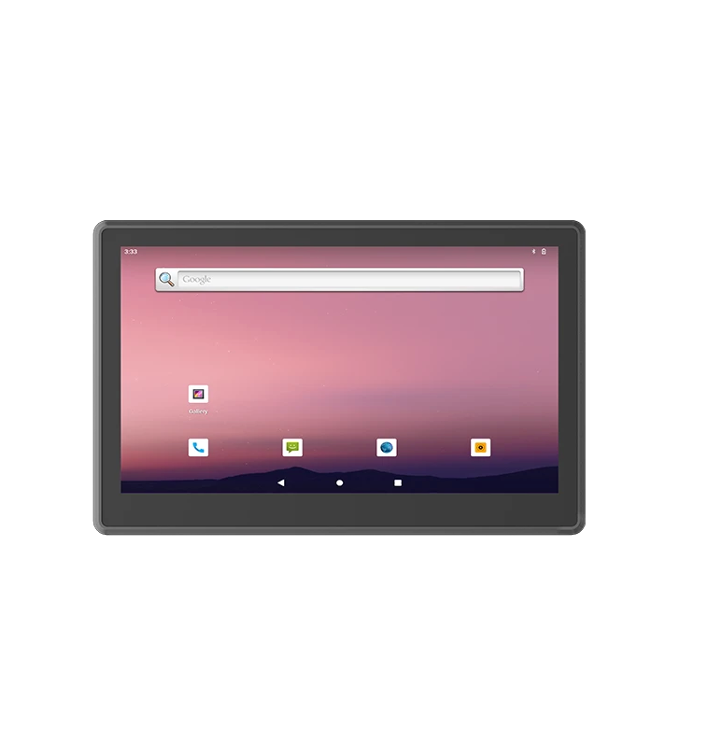
Industrial Panel PCs are highly integrated, all-in-one solutions. They combine an industrial-grade monitor, usually equipped with a durable, glove-friendly touchscreen, with a built-in computing system. They serve as the primary human-machine interface for operators working directly on the factory floor. This allows workers to control heavy machinery, input production data, and monitor system diagnostics in real-time.
Modern panel units are highly adaptable. For modernization projects requiring intuitive, app-based control interfaces, specialized devices like a 15.6" Android Embedded Industrial PC provide seamless touch controls combined with robust processing power. This makes them exceptionally ideal for inventory management terminals and automated machinery control where the user experience is paramount.
Embedded computers are highly compact, fanless systems designed to be tucked away completely out of sight. Technicians typically mount them inside electrical control cabinets, attach them to DIN rails, or bolt them directly onto the chassis of heavy machinery. Because they lack a built-in display screen, facilities primarily utilize them for backend data processing, automated machine control, and acting as localized network edge gateways. Their minuscule footprint makes them highly desirable for environments where physical space is severely limited.
When an enterprise project requires massive computational power, extensive data acquisition, or the ability to hold multiple expansion video cards, rackmount systems are the standard choice. These larger, heavier systems slide directly into standard server racks. While often located in dedicated server rooms, they maintain strict industrial build quality. They feature heavy steel chassis, redundant power supplies, and advanced dust filtration systems necessary to survive in close proximity to harsh industrial processes.
The deployment of rugged computing hardware spans across nearly every critical sector of the modern global economy. Below are the primary industries that rely heavily on this technology to maintain operational continuity and safety.
The modern factory floor is completely digitized. These computers act as the central brains behind factory automation. Facilities deploy them to control complex robotic arms with microsecond precision, manage high-speed automated assembly lines, and run intricate Supervisory Control and Data Acquisition software. By processing data locally on the factory floor rather than in a distant server, these machines ensure automated machinery operates safely and efficiently without relying on high-latency cloud connections.
The transportation sector presents incredibly unique environmental challenges. These include continuous extreme vibration, variable voltage from vehicle batteries, and unpredictable weather exposure. Engineers actively install rugged computers in railway systems, maritime vessels, and commercial fleet trucks. They seamlessly manage GPS tracking, real-time vehicle diagnostics, surveillance camera recording, and digital passenger signage. The shock-resistant nature of these systems ensures that hitting a deep pothole will not cause a catastrophic system crash.
Energy extraction and grid monitoring often take place in the most unforgiving environments on Earth. Technicians deploy ruggedized systems on offshore oil rigs, at remote solar farms, and along thousands of miles of exposed pipelines. These systems continuously monitor pressure, temperature, and flow rates. Because these remote locations are highly exposed to the elements, the computers must withstand blistering desert heat, freezing arctic cold, and highly corrosive salt air without requiring constant on-site maintenance.
Global manufacturing transitions deeper into automated paradigms every year. The demands placed on factory hardware are shifting rapidly. Recent industry trend analyses reveal a decisive move toward merging information technology with operational technology. Facilities currently generate terabytes of production data daily. Relying solely on centralized cloud infrastructure creates unacceptable latency bottlenecks. It also introduces severe security vulnerabilities. This shift fundamentally redefines hardware deployment on the factory floor.
The most significant evolution in this space is the rise of edge computing. Historically, computers simply collected data and sent it to distant servers for processing. Today, a robotic arm moving at high velocity cannot wait milliseconds for a cloud server response. The calculation must happen instantly. Modern industrial computers operate directly on the network edge. They frequently feature dedicated neural processing units and hardware accelerators. This empowers the equipment to process complex machine vision algorithms locally. By instantly identifying microscopic defects on an assembly line, these edge devices drastically reduce latency and enable real-time autonomous decision-making.
When deploying computing hardware in mission-critical environments, subjective marketing claims of durability are completely insufficient. Enterprise buyers and system integrators must rely on objective, empirical validation to ensure hardware reliability. True industrial hardware undergoes rigorous testing protocols and must achieve specific international certifications before safe integration.
The Ingress Protection rating system objectively classifies the degree of protection provided by mechanical casings against intrusion, dust, accidental contact, and water. For industrial hardware, this rating is a primary indicator of environmental resilience. The rating consists of two digits. The first digit indicates protection against solid particles, while the second digit indicates protection against liquids.
IP65: The hardware is completely dust-tight and protected against low-pressure water jets from any direction. This is the standard baseline for most general manufacturing environments.
IP67: The device is dust-tight and can withstand temporary immersion in water up to one meter deep for thirty minutes. This is essential for outdoor deployments or maritime applications.
IP69K: The highest standard available, indicating complete protection against dust and resistance to high-pressure, high-temperature washdowns. Systems with this rating are absolutely mandatory in the food and beverage industry, where strict sanitation protocols involve harsh chemical cleaning.
Originally developed by the United States Department of Defense, military-grade testing standards evaluate equipment survivability under extreme environmental stress. Top-tier industrial computers undergo these tests to validate their ruggedness for heavy commercial use. Key testing methods simulate the continuous, high-frequency vibrations found near heavy machinery. They also evaluate the system's ability to withstand sudden, high-impact mechanical drops without resulting in data corruption.
Beyond physical durability, these systems must operate safely within complex electrical environments. Certifications ensure electromagnetic compatibility. In a factory setting, large motors and high-voltage equipment generate significant electromagnetic interference. Certified systems feature isolated circuitry that prevents this electrical noise from causing system reboots. Additionally, global compliance standards ensure that the manufacturing of the computer does not utilize specific dangerous materials like heavy metals.
Selecting the correct computing architecture requires a systematic evaluation of your specific operational ecosystem. Procuring an under-specced machine leads to premature failure, while over-speccing results in unnecessary capital expenditure. Follow this structured evaluation framework to maximize your investment.
The first step in the procurement process is conducting a comprehensive environmental audit of the deployment site. Hardware specifications must directly correlate with environmental threats. If the deployment area experiences heavy particulate matter, such as a woodworking facility, a completely fanless design is non-negotiable. Temperature volatility is another critical metric. You must verify that the selected system utilizes wide-temperature-rated capacitors capable of passive thermal dissipation under maximum processor load.
The computational requirements of your software dictate the necessary processor architecture and operating system. For heavy data processing or running legacy Windows-based automation software, standard x86 processors are the common choice. However, these processors often generate more heat.
Conversely, for human-machine interface applications, localized data collection terminals, and smart kiosks, ARM-based architectures offer superior energy efficiency and far lower heat generation. If your facility requires a highly stable, energy-efficient terminal, integrating a Rockchip RK3568 industrial computer ensures high-definition display outputs and multi-network connectivity. This avoids the severe thermal throttling issues common in consumer-grade tablets.
One of the most significant differentiators between commercial computers and industrial systems is the input and output interface. Industrial environments do not operate exclusively on modern USB-C or Wi-Fi connections. They rely heavily on legacy protocols to communicate with programmable logic controllers and heavy machinery that may have been in service for decades.
When selecting a system, ensure it features rich port options. Look for multiple serial ports for legacy communication, dual network ports for strict network redundancy, and isolated general-purpose input/output pins. These pins allow the computer to send and receive simple binary electrical signals, such as triggering a physical alarm or opening a mechanical valve.
Industrial computers remain the critical, beating heart of modern automated manufacturing and enterprise infrastructure. They actively prevent costly downtime, protect vital data, and ensure continuous operation in extremely harsh environments where commercial hardware would instantly perish.
Carefully assess your facility requirements, processing needs, and legacy connectivity before making a final purchase. Investing in highly reliable solutions significantly lowers your long-term operational expenses. If you are ready to future-proof your automation infrastructure, exploring a high-performance Android Embedded Industrial PC from Vincanwo Group is a strategic starting point. Purpose-built hardware eliminates constant replacement cycles and maximizes your technological return on investment.
These systems are engineered for exceptional longevity, typically offering a functional lifespan of five to ten years. This extended lifecycle is achieved through the use of high-grade, temperature-resistant components and fanless thermal management systems that eliminate mechanical wear. Manufacturers guarantee component availability for years, ensuring that enterprise users do not face unexpected software incompatibilities or forced hardware migrations.
Deploying a standard consumer desktop in a heavy industrial setting is highly discouraged and empirically proven to result in rapid system failure. Consumer-grade computers utilize active cooling fans that draw ambient air, along with conductive dust, metal shavings, and moisture, directly onto the delicate motherboard. The resulting downtime and constant replacement costs far exceed the initial savings of purchasing a cheaper commercial device.
A fanless system is a computing device designed without any internal or external cooling fans. Instead of relying on active airflow, these systems utilize passive thermal management. The chassis itself acts as a massive heat sink. Internal heat-generating components are thermally coupled to the chassis, allowing heat to dissipate safely into the surrounding environment. This design completely seals the computer against dust, dirt, and moisture ingress.
The higher upfront cost is a direct reflection of premium build quality, rigorous certification processes, and guaranteed long-term reliability. These systems utilize specialized, wide-temperature-rated components and undergo expensive testing protocols to guarantee performance in extreme conditions. The premium paid upfront acts as a vital insurance policy against the massive financial losses associated with unexpected manufacturing downtime.
A programmable logic controller is a highly specialized, micro-controller designed for hard real-time, basic logic operations on the factory floor, such as flipping switches or timing motor functions. An industrial computer, however, possesses far greater processing power. It handles complex data analytics, runs sophisticated graphical user interfaces, manages extensive network communications, and stores massive amounts of production data.
Yes, these robust machines can run standard desktop operating systems like Windows 10, Windows 11, and various Linux distributions. However, depending on the specific application and processor architecture, many facilities opt for specialized embedded operating systems, such as Android or Ubuntu, to ensure maximum stability and prevent unwanted background updates during critical manufacturing processes.


