
Views: 0 Author: Site Editor Publish Time: 2026-10-27 Origin: Site


The Industrial Internet of Things expands at a relentless pace. This growth drives a critical need for robust edge computing solutions. Step onto a busy steel foundry floor or ride a vibrating railway locomotive. You will quickly see why traditional desktop computers fail spectacularly in these environments. Standard towers remain highly vulnerable to airborne dust, extreme temperature fluctuations, and constant mechanical vibrations. Furthermore, they consume far too much physical space inside cramped factory control panels.
The solution to these operational challenges lies in purpose-built hardware. A rugged mini PC serves as the ultimate problem-solver for modern industrial facilities. By bringing server-level reliability and real-time data processing directly to the industrial edge, these compact powerhouses eliminate network latency. They achieve this without monopolizing valuable floor space. This guide explores exactly what makes an industrial compact computer essential. We will examine core advantages, real-world applications, and actionable steps for choosing the right hardware for specific environmental needs.
Purpose-Built Durability: Industrial mini computers feature advanced fanless designs, wide temperature tolerances, and high shock resistance engineered specifically for extreme environments.
Space Optimization: Their highly compact footprint saves critical physical space in manufacturing plants, smart kiosks, and medical carts without sacrificing processing power.
Edge Computing Power: Serving as the backbone for industrial networks, these devices enable real-time local data processing. This significantly reduces network latency and bandwidth costs.
Strategic Selection: Choosing the correct hardware requires a careful evaluation of thermal management, legacy I/O connectivity, and specific environmental certifications.
To understand the immense value of industrial computing, we must first define what separates specialized hardware from everyday consumer-grade alternatives. The distinction lies entirely in engineering priorities. Commercial PCs prioritize peak performance in climate-controlled rooms. In contrast, industrial PCs prioritize continuous operation under severe environmental stress.
At its core, a ruggedized mini computer is a highly compact computing unit designed for continuous 24/7 operation in unforgiving environments. Unlike standard office desktops requiring clean and air-conditioned spaces, these devices function reliably amidst heavy dust, moisture, and electromagnetic interference. They act as the critical link between physical machinery and digital networks. They capture and process vital data directly at the source.
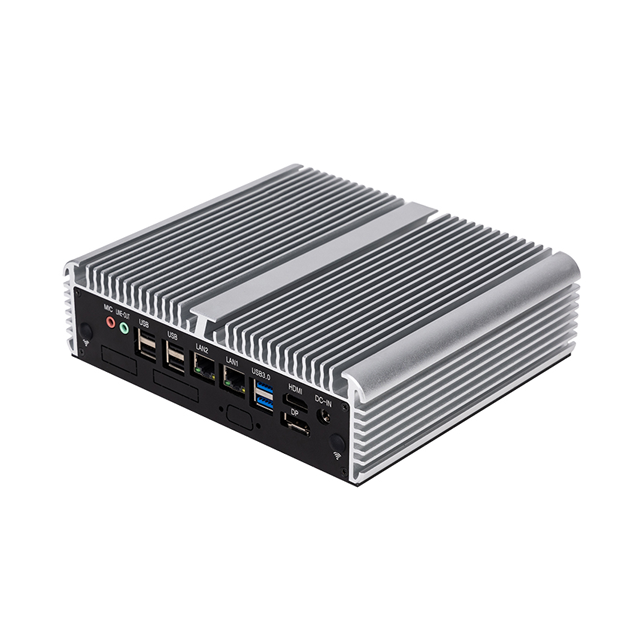
The most defining physical characteristic of this hardware is its fanless design. Standard computers rely on mechanical fans to circulate air. This inadvertently pulls in metallic debris, dust, and corrosive particles. By eliminating cooling fans and spinning hard disk drives, industrial mini computers utilize a solid-state architecture. Heat is passively dissipated through a heavy-duty extruded aluminum chassis acting as a massive heat sink. Consequently, removing moving parts drastically reduces the ingress of environmental contaminants. It eliminates the most common points of mechanical failure.
Internal components of industrial computers differ significantly from consumer variants. Commercial motherboards utilize standard capacitors and lightweight plastic housings. Industrial-grade motherboards are manufactured with high-tolerance components designed to withstand extreme thermal stress. Furthermore, they incorporate wide-voltage power inputs to safely handle the power spikes and voltage drops common in factory settings.
Feature | Standard Consumer PC | Industrial Mini PC |
|---|---|---|
Cooling Method | Active with internal mechanical fans | Passive via fanless aluminum chassis |
Enclosure Material | Lightweight plastic or thin metal | Extruded aluminum or heavy-duty alloy |
Operating Temperature | 10 to 35 degrees Celsius | -40 to 70 degrees Celsius with wide temp support |
Lifecycle and Availability | 1 to 2 years | 5 to 7+ years for long-term supply |
Vibration Resistance | Low due to vulnerable spinning drives | High due to solid-state components and cable-less design |
Deploying specialized hardware at the industrial edge offers measurable operational benefits. These advantages translate directly into reduced downtime, lower maintenance costs, and highly optimized physical workspaces.
Physical space is a premium commodity in manufacturing facilities and automated systems. The exceptionally small footprint of a rugged mini PC allows engineers to deploy powerful computing nodes in highly constrained environments. Technicians easily mount these devices inside tight control DIN-rail cabinets or conceal them behind digital signage displays. They also integrate perfectly into the chassis of automated guided vehicles. This space efficiency ensures computing power sits exactly where data is generated.
Beyond physical dimensions, the passive cooling architecture provides benefits far beyond dust resistance. Since there are no mechanical fans, the operational noise output is effectively zero. This silent operation proves critical in healthcare facilities, laboratories, and acoustic testing chambers. More importantly, the solid-state design results in unmatched reliability. The mean time between failures is significantly higher than actively cooled systems. This leads to a drastic reduction in routine maintenance and costly operational downtime.
Industrial environments rarely offer stable climates. Foundries and steel mills generate extreme heat. Cold chain logistics and outdoor monitoring stations experience freezing temperatures. Effective thermal design allows industrial hardware to operate seamlessly across a wide temperature spectrum. Internal components are specifically soldered and coated to prevent condensation damage and thermal expansion failures.
Heavy machinery, stamping presses, and transportation vehicles generate constant kinetic energy. Standard computers suffer from disconnected cables and shattered hard drives when subjected to continuous vibration. Industrial computing solutions combat this through cable-less internal designs and solid-state drives. Combined with reinforced chassis mounting points, these devices maintain data integrity even in high-vibration railway systems and mining equipment.
Theoretical advantages of industrial computing translate into diverse real-world applications across multiple sectors. As industrial automation expands, these devices serve as the foundational hardware for data acquisition.
On the modern factory floor, industrial mini computers act as the central nervous system for automation. Facilities frequently deploy them as IoT gateways. They collect raw sensor data from legacy programmable logic controllers and transmit it to centralized servers. Additionally, high-performance variants manage complex machine vision systems. By processing high-resolution camera feeds locally, they enable automated quality control and precise robotic arm guidance without cloud latency.
Data collection extends far beyond indoor facilities. In sectors such as agriculture, oil and gas, and smart city infrastructure, computing hardware must survive semi-outdoor conditions. Engineers deploy these computers in traffic monitoring cabinets, remote weather stations, and pipeline pressure nodes. Their ability to withstand wide temperature fluctuations and high humidity makes them ideal for remote deployments. Dispatching a technician to these sites is often logistically prohibitive.
The healthcare sector requires hardware meeting strict hygiene and spatial constraints. Industrial mini computers are increasingly integrated into mobile medical carts and operating room equipment. Their compact size prevents interference with critical medical instruments. Meanwhile, their fanless design remains paramount for infection control. They do not circulate air, meaning they never blow dust or pathogens across sterile environments. Hospital staff can easily wipe down the sealed chassis with harsh chemical disinfectants.
Transportation and logistics rely heavily on edge computing for route optimization and cargo tracking. Technicians install industrial mini PCs in long-haul trucks, police cruisers, and public transit trains. Vibration resistance is critical in these scenarios. Specifically, specialized in-vehicle computers feature ignition power control. This allows the system to boot up safely when the vehicle starts and shut down gracefully when the engine turns off. It effectively prevents data corruption and battery drainage.
While industrial computing solutions offer robust performance, facility managers must base engineering decisions on an objective evaluation of both strengths and limitations.
The Pros: From a financial perspective, the primary advantage is longevity. Field data indicates that industrial computers routinely outlast consumer hardware by several years in harsh conditions. This durability results in a significantly lower total cost of ownership over a five-year lifecycle. Facilities virtually eliminate costs associated with maintenance labor, replacement parts, and operational downtime.
The Cons and Limitations: The most notable limitation involves the initial capital expenditure. Extruded aluminum chassis and industrial-grade components carry a higher upfront cost than standard plastic desktops. Furthermore, their compact fanless nature imposes thermodynamic limits. They generally cannot house massive high-heat dedicated graphics cards required for training complex AI models. That specific task remains better suited for climate-controlled server rooms.
The Verdict: For environments battling dust, extreme temperatures, or space constraints, the long-term return on investment of an industrial rugged mini PC heavily outweighs the initial investment. Preventing just a single day of factory downtime often covers the hardware cost difference entirely.
Selecting the appropriate hardware requires matching technical specifications to the physical and computational demands of your deployment environment. Here is a definitive guide to evaluating industrial computing solutions from a senior engineer's perspective.
The required CPU architecture depends entirely on the workload. For simple data logging or acting as a basic IoT gateway, low-power processors are highly efficient and generate minimal heat. Conversely, if your deployment involves machine vision or edge AI inference, engineering teams must specify high-performance processors. For instance, systems equipped with Intel Core i5 or i7 processors paired with integrated graphics can easily handle parallel processing tasks locally.
Industrial environments blend cutting-edge smart sensors with decades-old machinery. A critical factor in selecting an industrial computer is its input and output interface. You must ensure the hardware features rich connectivity. Look for equipment providing multiple COM ports for legacy controllers and dual Gigabit LAN ports for network redundancy. Digital I/O interfaces are also essential for direct relay control.
Never assume all fanless computers can handle extreme heat. It is vital to verify the manufacturer's specified operating temperature range. Examine the chassis thermal design closely. Heavier, deeply finned extruded aluminum heat sinks dissipate heat much more effectively. If the device will operate in a freezing warehouse or near an industrial oven, ensure the specifications explicitly guarantee stable operation from -20 degrees Celsius up to 60 degrees Celsius or wider without CPU thermal throttling.
The physical installation environment dictates the required mounting brackets. Before purchasing, evaluate the physical workspace. If you plan to install the computer inside an industrial control panel, DIN-rail mounting compatibility is essential. For integration behind monitors, VESA mount support is required. Wall-mounting brackets work perfectly for securing the device to factory pillars, ensuring seamless integration into existing infrastructure.
Industrial power grids are notoriously unstable. They are characterized by frequent voltage spikes and electromagnetic interference. Standard computers require a stable 12V or 19V input, which easily fails under industrial power fluctuations. It is crucial to select hardware that supports wide-voltage inputs, typically ranging from 9V to 36V DC. Built-in over-voltage protection and surge protection serve as mandatory features to prevent catastrophic electrical damage.
The trajectory of industrial computing is moving rapidly toward greater decentralization. Recent industry analyses of the global industrial IoT market reveal a clear shift. Facilities are actively moving away from centralized cloud computing due to rising bandwidth costs and unacceptable latency issues. The current industry trend heavily favors robust edge computing architectures.
As the convergence of high-speed 5G connectivity and edge artificial intelligence matures, future iterations of industrial mini computers will become even more capable. We are seeing a massive push toward integrating powerful neural processing units directly into compact edge devices. This evolution allows complex AI algorithms, such as predictive maintenance models and advanced robotics control, to be processed entirely locally. By reducing reliance on cloud infrastructure, manufacturing plants achieve true real-time automation with zero latency. This solidifies the rugged edge device as the critical foundation for the intelligent factories and smart cities of tomorrow.
Identifying hardware that successfully balances space constraints with industrial-grade durability is critical for successful deployments. Engineers require systems delivering consistent performance without demanding constant maintenance interventions.
For facilities looking to upgrade their edge computing infrastructure, evaluating purpose-built hardware provides a clear baseline. A high-quality rugged mini PC typically combines a completely fanless architecture with an extruded aluminum chassis. This ensures maximum protection against dust and thermal stress. When selecting a specific unit, models such as the VRE-2L series demonstrate the importance of rich legacy connectivity. With features like dual Intel Gigabit Ethernet ports, multiple COM interfaces, and wide-voltage DC power support, these units prove highly adaptable for both complex factory automation and remote monitoring scenarios.
Rugged mini PCs have undeniably become the backbone of modern industrial networks. They offer an uncompromising blend of space-saving design and server-level reliability. By processing critical operational data directly at the source, these devices keep automated lines moving efficiently. They achieve this without taking up valuable factory floor space.
Take the time to assess your facility's current computing infrastructure today. If you are struggling with hardware failures in harsh environments, it is time for an upgrade. Explore the high-performance industrial computing solutions at Vincanwo Group to find the perfect match for your operational needs. Upgrading to a reliable edge device will prevent costly system downtime, reduce ongoing maintenance labor, and fully optimize your physical workspace for the future of industrial automation.
It means the computer uses passive cooling to regulate its internal temperature. Instead of relying on a mechanical fan that pulls in dirty air, it uses an extruded aluminum heat-sink chassis. This dissipates heat directly into the surrounding environment. This design prevents dust intake, reduces mechanical failure, and significantly lowers operating noise.
Because they are built with high-tolerance industrial-grade components and completely lack moving parts, these computers are exceptionally durable. They typically boast an operational lifespan of five to seven years or more. Even when running continuously in harsh 24/7 operating conditions, they significantly outlast standard consumer PCs.
Yes, most modern industrial mini PCs feature multiple display outputs. They typically include a combination of HDMI, DisplayPort, or VGA connections. This rich display connectivity allows them to easily support dual or even triple independent displays. This is ideal for control room monitoring and digital signage applications.
Waterproofing depends entirely on the device's specific Ingress Protection rating. While the vast majority are highly dust-resistant and handle ambient moisture due to their sealed chassis, standard models are not fully waterproof. You will need a specifically rated IP65 or IP67 model for true waterproofing in heavy washdown environments, such as food processing plants.
The primary difference lies in their operational environment tolerance. Commercial PCs are designed for clean, climate-controlled offices and prioritize peak processing speed. Industrial PCs are engineered with fanless designs, wide-temperature components, and rugged enclosures to survive dust, vibration, and extreme temperatures on factory floors.
Unlike standard desktop computers that plug directly into an AC wall outlet, industrial mini PCs typically use a wide-voltage DC power input. They wire directly into the factory's existing DC power supply, often supporting ranges from 9V to 36V. This setup protects the internal components from the frequent voltage spikes and drops common in industrial power grids.


