
Views: 0 Author: Site Editor Publish Time: 2026-11-01 Origin: Site


Imagine a robotic arm waiting 200 milliseconds for a remote server to grant permission to stop. On a high-speed production line, that brief delay translates directly into a smashed product or a severe safety hazard. Traditional networks often struggle to manage the massive influx of data generated by modern automated sensors. By shifting computational tasks directly to the source, an Industrial Edge Computer resolves these bottlenecks. Processing information locally eliminates expensive delays and keeps your production line moving. In this post, we will explore the strategic advantages, hardware realities, and practical applications of modern decentralized architectures from a frontline engineering perspective.
Latency Reduction: Process data locally to achieve real-time response times. This bypasses the unpredictable delays inherent in remote data transmission.
Data Sovereignty and Security: Maintain sensitive proprietary data strictly within your facility firewall. This significantly shrinks the external attack surface.
Cost Efficiency: Drastically reduce bandwidth overhead. Filtering data at the point of origin is far cheaper than streaming terabytes of raw information continuously.
Scalability: Advanced solutions provide the localized computational horsepower necessary to run machine learning algorithms directly on the shop floor.
As manufacturing environments evolve into hyper-connected ecosystems, the sheer volume of data produced by robotics has outpaced legacy network capacity. A decentralized processing center sits exactly where the data is born. By moving intelligence closer to the machinery, enterprises bypass the constraints of centralized architectures.
Industry analysts note a massive shift in operational architecture across global manufacturing. Current market trends indicate that over half of enterprise-managed data will soon be created and processed outside traditional data centers. The momentum is clear. Data gravity is pulling computation back to the factory floor. Facilities are no longer just collecting sensor readings; they are demanding immediate, AI-driven insights right at the machine level to remain competitive and reduce operational downtime.
Standard commercial desktops are designed for climate-controlled offices. Industrial-grade hardware is built to survive. Conventional PCs rely on fans that draw in dust, metallic shavings, and humidity. This inevitably leads to rapid hardware failure. In contrast, robust units utilize passive cooling through extruded aluminum chassis. They effectively dissipate heat without a single moving part. Furthermore, these machines feature conformal-coated motherboards to resist moisture, ensuring consistent performance for continuous industrial demands.
Within the connected landscape, localized computing serves as a vital bridge between Operational Technology and Information Technology. These devices do more than just forward information. They actively participate in the control loop. By translating industrial protocols like Modbus or PROFINET into IT-friendly formats such as MQTT, these hubs ensure seamless integration with enterprise resource planning systems while maintaining strict local control over physical processes.
To guarantee uninterrupted performance, hardware must meet rigid field specifications. A fanless design is non-negotiable. It removes common points of mechanical failure and seals internal components against particulate ingress. Wide temperature tolerance ensures the unit functions flawlessly whether installed in a refrigerated storage facility or adjacent to a high-heat furnace. High vibration resistance, achieved through cable-less internal designs, ensures that heavy machinery movement does not disrupt your data flow.
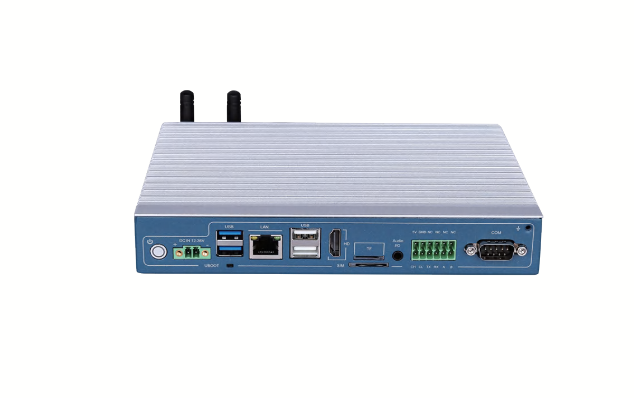
Transitioning to a localized architecture offers immediate gains in operational speed and system resilience. Current industry demands emphasize distributed intelligence. The ability to make split-second decisions locally is now a competitive necessity rather than a luxury.
In automated manufacturing, latency is not merely an inconvenience. It represents a significant safety risk. Emergency shutdown systems require responses measured in milliseconds. By keeping the processing logic just a few feet from the hardware, an Android Industrial Edge Computer ensures deterministic, near-instantaneous feedback. Production lines move safely without waiting for distant server round-trips.
Modern manufacturing facilities generate petabytes of data monthly. Yet much of this information is routine and unactionable. Transmitting raw feeds externally consumes exorbitant bandwidth. Edge devices filter this stream locally. They identify anomalies and summarize routine metrics before transmission. Consequently, this localized filtering reduces network costs by up to 90 percent, allowing only critical alerts to traverse the wider network.
Cloud-reliant architectures are notoriously vulnerable to internet instability. Should a connection drop, a dependent facility faces a complete operational halt. Localized computing provides a vital layer of autonomy. Because the processing occurs on-site, assembly lines and safety protocols continue to run smoothly even during a total network disconnection.
Cybersecurity remains a top priority in sectors where digital intrusions cause physical damage. By keeping sensitive operational data behind an internal firewall, localized processing minimizes exposure to external interception. Modern devices incorporate hardware-level security, such as Trusted Platform Modules, to encrypt local data and secure the boot process against unauthorized interference.
A common misconception suggests that decentralized computing replaces centralized servers. In reality, the most resilient architectures utilize both. Understanding the distinction is vital for optimizing budgets and operational workflows.
Feature | Industrial Edge Computing | Cloud Computing |
|---|---|---|
Latency | Ultra-low. Millisecond response times. | Variable. Dependent on network stability. |
Bandwidth Usage | Minimal. Data is filtered locally. | High. Requires streaming raw data continuously. |
Security | High. Data remains on-premises. | Moderate. Data travels across public networks. |
Best Use Case | Real-time control, machine vision, protocol translation. | Long-term data storage, global trend analysis, heavy AI training. |
The optimal strategy is a hybrid architecture. The local device performs high-speed data ingestion and real-time control. Meanwhile, the central server consumes the refined, compressed data to train global AI models. Once a model is updated, it is pushed back down to the shop floor for local inference. This creates a continuous, intelligent feedback loop.
The theoretical advantages of localized computation translate into tangible improvements across various sectors. These applications enable the next generation of smart manufacturing.
Unexpected equipment failure is a massive revenue drain. Traditional maintenance relies on fixed schedules, which often miss early degradation. By continuously monitoring vibration sensors and thermal cameras, an industrial edge computing hardware setup identifies microscopic anomalies in motor behavior weeks before a failure occurs. This allows engineering teams to schedule repairs during planned downtime.
High-speed production lines move too quickly for manual human inspection. By deploying units equipped with dedicated neural processing units, image processing happens right on the line. The system detects surface defects or dimensional inaccuracies within milliseconds. It triggers an immediate rejection without slowing production throughput.
Energy costs significantly impact the bottom line. By interfacing with smart meters across the shop floor, localized hardware monitors power consumption at the machine level. It automatically identifies energy waste, such as idling equipment. The system dynamically adjusts power distribution to avoid peak demand charges.
Selecting hardware requires matching technical capabilities to the specific environment of your facility. You need to look at real-world parameters.
The hardware choice hinges on your specific operational goals. For example, processors like the RK3568 provide an excellent balance of computational power and energy efficiency. Featuring a Quad-core Cortex-A55 architecture and an integrated 1 TOPS NPU, this type of chip handles AI inference and computer vision tasks without generating excess heat. This makes it ideal for fanless, sealed enclosures.
Your hardware must act as a universal translator on the factory floor. Look for diverse connectivity options. Support for serial interfaces like RS-485 and RS-232 is critical for integrating decades-old legacy equipment. Simultaneously, Gigabit Ethernet and modern wireless protocols ensure seamless upward integration. Isolated I/O ports are particularly important to protect internal circuitry from the electrical surges commonly found in heavy industrial settings.
While the benefits are substantial, deploying a new architecture across a legacy facility presents specific engineering challenges.
Operating hundreds of nodes requires robust remote management software. IT teams must push security patches, monitor hardware health, and perform remote reboots without sending technicians to physical machine locations. Furthermore, many facilities rely on equipment that is decades old. Integrating an RK3568 Industrial Edge Computer requires bridging the gap between legacy PLCs and modern IT networks. By utilizing devices with extensive protocol libraries, engineers translate aging proprietary formats into modern standards.
Procuring hardware is a long-term investment. Begin by auditing your facility pain points and future automation goals. Assess environmental constraints such as temperature extremes, metallic dust, and constant vibration. Calculate your data load to ensure you are not over-specifying or under-powering your solution. Prioritize modularity. Devices that allow for expansion slots ensure that your infrastructure can adapt as your machine learning models grow more complex.
The fundamental distinction is durability. A regular PC uses fans for cooling, which clog with dust and fail in harsh factory conditions. Industrial models use fanless, extruded aluminum designs to dissipate heat in extreme temperatures. They also provide specialized serial ports for legacy machine integration and guarantee continuous reliability.
Yes. These devices are designed for autonomy. They ingest sensor data and execute critical control commands even when disconnected from the central network. They store data locally and synchronize with the main server once connectivity is restored.
By processing data locally, you prevent raw, sensitive telemetry from traveling over public networks. This approach minimizes the number of potential entry points for cyber attackers and keeps proprietary operational information safely behind your internal firewall.
It is a standard procedure when using the correct hardware. Most modern devices include built-in protocol converters. They translate the serial or proprietary signals from older PLCs into modern, IT-standard formats for seamless integration.
Most ruggedized devices are designed to operate on wide-range DC power inputs, typically spanning from 9V to 36V. This flexibility allows them to draw power directly from standard industrial control cabinets without requiring specialized adapters, ensuring stable operation even during minor voltage fluctuations.
Storage relies on solid-state technology. To withstand vibration, these computers utilize onboard eMMC storage or industrial-grade SSDs. Unlike traditional spinning hard drives, solid-state components have no moving parts, greatly reducing the risk of data loss due to mechanical shock on the factory floor.
The RK3568 provides an optimal balance of processing capability and low power consumption. With an integrated neural processing unit for AI tasks, it runs real-time defect detection and analytics natively. It accomplishes this without generating the excess heat that would require cooling fans, making it a staple in modern rugged designs.
Upgrading your facility infrastructure requires hardware that can survive the realities of the shop floor while delivering modern AI capabilities. If you are looking to eliminate network latency, integrate legacy PLCs, and deploy real-time machine vision, explore the ruggedized solutions available at Vincanwo Group to find the exact specifications your project demands.


