
Views: 0 Author: Site Editor Publish Time: 2026-09-20 Origin: Site


The foundation of smart manufacturing and modern automation relies entirely on robust computing infrastructure. Standard commercial computers simply cannot survive in high-stakes environments like automotive assembly lines, chemical processing plants, or heavy milling facilities. Choosing inadequate hardware leads to catastrophic production downtime. It causes critical data loss and severe security vulnerabilities that can cripple an entire operation.
Engineers, IT managers, and procurement teams face a complex balancing act. You must evaluate processing power, environmental resilience, and budget constraints. Understanding core technical specifications and daily operational demands allows decision-makers to confidently select the appropriate hardware. This ensures your manufacturing processes remain online and secure.
Recent market analyses reveal a rapid shift in the industrial computing landscape. The industry is moving heavily toward decentralized processing and deep convergence between Information Technology and Operational Technology. Facilities demand edge computing capabilities. Processing data locally on the machine eliminates network latency and reduces cloud bandwidth costs. Furthermore, sustainability is now a primary selection criterion. Modern plants are abandoning power-hungry legacy systems. Instead, they are adopting ultra-efficient ARM-based architectures that reduce thermal output and overall energy consumption. This fundamental shift changes exactly how procurement teams must approach hardware specifications.
Environment Dictates Design: Temperature extremes, airborne dust, and mechanical vibration serve as the primary filters for hardware selection.
Form Factor and Interface: Choosing between headless box computers or all-in-one panel displays depends strictly on operator interaction requirements.
Edge AI Integration: Modern industrial systems must support local data ingestion and AI frameworks to remain relevant.
Connectivity: Seamless integration relies on legacy port support paired with stringent modern network protocols.
Total Cost of Ownership: Upfront capital expenditure matters far less than long-term reliability and extended component lifecycles.
Contrasting consumer-grade electronics with rugged Industrial PCs reveals exactly why standard fans and plastic chassis fail on the factory floor. Engineers frequently see standard office computers placed near CNC machining centers act like vacuums. They suck in conductive metal shavings and corrosive aerosolized lubricants. This inevitably leads to thermal throttling, short circuits, and sudden system death. Harsh-environment workstations are engineered from the ground up to survive these exact hostile conditions.
Industrial deployments rarely offer the luxury of climate-controlled server rooms. Equipment is often bolted directly next to high-heat manufacturing furnaces or installed in freezing storage facilities. Therefore, wide operating temperature ranges spanning from -20 degrees Celsius to 70 degrees Celsius are a standard baseline requirement. This remarkable thermal resilience is achieved through fanless engineering. By utilizing extruded aluminum alloy chassis as massive passive heat sinks, these systems dissipate thermal energy without active airflow. Eliminating moving cooling parts prevents the intake of hazardous airborne debris. It also removes the most common point of mechanical failure.
Ingress Protection ratings are a non-negotiable specification for devices exposed to the elements or rigorous cleaning protocols. This is particularly crucial for front-panel Human-Machine Interfaces where operators interact directly with the screen. An IP65 rating ensures the front panel is fully dust-tight and protected against low-pressure water jets, making it ideal for general manufacturing. For food and beverage processing, a strict IP69K rating is mandatory to survive high-pressure, high-temperature washdowns.
Heavy machinery and automated guided vehicles generate continuous kinetic energy. Standard hard disk drives with spinning platters quickly rattle loose under these conditions. Ruggedized hardware mitigates this operational risk. By utilizing solid-state drives, soldered memory, and cable-less internal board designs, critical operational data remains secure during continuous heavy-duty cycles.
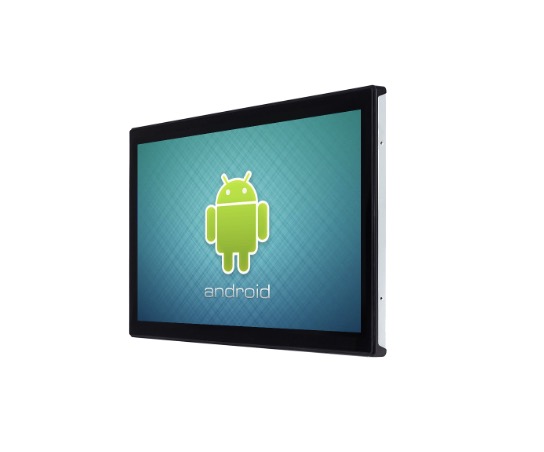
Surviving the physical environment is only the baseline. Matching the structural shape of the computer to its daily operational function is equally critical for workflow efficiency. The spatial constraints of the deployment area and the necessity of human interaction dictate the appropriate form factor.
A headless Box PC is typically mounted on a DIN rail inside a secure control cabinet. It handles background processing, machine control, or acts as an IoT data router. In contrast, an all-in-one Panel PC is required when operators need to monitor SCADA systems, input parameters, and control machinery directly at the site of operation.
Historically, industrial interfaces were dominated by bulky Windows-based systems. However, modern smart manufacturing increasingly favors intuitive, app-centric architectures. Integrating an 18.5-inch Android Industrial Panel PC provides an optimal intersection of screen real estate and physical footprint. The 18.5-inch widescreen format offers ample space for complex machine vision feeds and multi-window control interfaces. It achieves this without overwhelming the physical mounting space on a machine arm.
From a practical engineering standpoint, imagine an operator wearing thick protective gloves. They need to quickly adjust a machine parameter to prevent a bottleneck. Advanced panels equipped with 10-point capacitive multi-touch technology allow for highly responsive pinch-to-zoom and swipe gestures. This significantly reduces interaction time and minimizes operator fatigue.
A highly responsive interface relies entirely on the underlying computational engine. Selecting the appropriate central processing unit requires a precise calculation of the intended workload. Over-specifying leads to unnecessary thermal output and inflated costs. Under-specifying causes system latency and critical bottlenecks.
The industrial computing sector generally relies on two primary architectures. The x86 architecture delivers immense computational power and broad compatibility with legacy industrial software. However, these chips generally consume more power and generate significant heat. On the other hand, ARM architectures operate on a highly energy-efficient design. Flagship processors like the RK3588 chipset generate substantially less heat. This makes them perfect for sealed, fanless displays and localized control tasks where massive computational overhead is unnecessary.
Specifically, modern manufacturing hardware can no longer function merely as passive data loggers. They are now active Edge AI gateways. Sending massive volumes of raw manufacturing data to a centralized cloud for processing introduces unacceptable latency. Processing data at the edge allows for millisecond decision-making.
To support real-time machine vision and predictive maintenance algorithms, buyers should prioritize hardware equipped with dedicated Neural Processing Units. For instance, the RK3588 chip features an integrated NPU capable of 6 TOPS computing power. This accelerates machine learning workloads, allowing the hardware to instantly execute AI inferences, such as detecting microscopic defects on a fast-moving assembly line, without relying on external network connectivity.
Generating localized AI insights is only half the battle. The system must also seamlessly transmit this data across the facility. A newly deployed computer must bridge the gap between decades-old legacy machinery and modern cloud-based analytics platforms.
Unlike consumer laptops that rely almost exclusively on USB-C, industrial hardware must feature a diverse array of physical interfaces. Critical ports include RS-232 and RS-485 serial COM ports. These are mandatory for communicating with legacy Programmable Logic Controllers and older sensors. Multiple Gigabit LAN ports are equally essential. They allow engineers to physically segregate internal machine networks from wider enterprise networks to prevent unauthorized access. Additionally, CAN bus interfaces are heavily utilized in automotive manufacturing for reliable micro-controller communication.
Robust wireless connectivity is required for remote deployments or sprawling logistics hubs where running physical Ethernet cables is unfeasible. Modern units integrate Wi-Fi 6 for high-bandwidth local connections and Bluetooth for short-range sensor pairing. Furthermore, internal expansion slots allow for the integration of 4G LTE or 5G cellular modules. This enables continuous telemetry data streaming via MQTT protocols to advanced databases, ensuring uninterrupted data ingestion.
This intricate web of hardware and connectivity is only as effective as the software environment managing it. The choice of operating system dictates the software ecosystem, security update frequency, and overall system stability.
Windows IoT Enterprise remains a standard for environments running complex legacy applications and specialized automation tools. Linux is the preferred choice for developers building custom, highly stable edge computing solutions. It offers unparalleled control over system resources and natively supports containerized applications.
As the industry evolves, Android is rapidly capturing the touchscreen interface market. Android provides a lightweight, highly customizable environment ideal for kiosk modes and custom application deployments. Because it requires significantly less processing overhead than Windows, it becomes highly cost-effective when paired with energy-efficient ARM hardware.
Deploying uncertified hardware in a commercial setting is a severe liability. Compliance with global standards ensures operational safety, legal protection, and seamless integration into existing infrastructure. Procurement teams must verify specific regulatory certifications. CE and FCC marks ensure the device meets strict electromagnetic interference standards and will not disrupt sensitive factory equipment. RoHS certifies the restriction of hazardous substances.
As factory floors become increasingly digitized, they are exposed to sophisticated cyber threats. Modern edge devices must support hardware-level defenses. Trusted Platform Module chips provide hardware-based encryption for passwords and cryptographic keys. Secure Boot features ensure that only authenticated software can execute during the startup process, locking out malware before the operating system even loads.
A frequent procurement mistake is evaluating hardware based solely on the initial purchase price. Consumer-grade PCs may seem cheaper upfront, but their high failure rates lead to catastrophic operational expenses through continuous replacements and halted production lines. True industrial hardware manufacturers provide embedded roadmaps, guaranteeing strict revision control and component availability for five to ten years. This longevity ensures that if a unit needs replacement years post-deployment, a drop-in duplicate is available, requiring zero software reconfiguration.
Investing in rugged Industrial PCs directly impacts your Return on Investment by enabling predictive maintenance. Reliable computers can continuously run condition monitoring algorithms. They analyze acoustic data, motor vibration, and temperature spikes in real-time. By predicting a bearing failure weeks before it physically snaps, plant managers can schedule maintenance during planned downtimes. This proactive approach prevents unexpected machine halts and drastically reduces lost production revenue.
To streamline the procurement process, utilize this actionable evaluation standard before finalizing any hardware specification. Abstract requirements mean nothing without concrete benchmarks.
Selection Criteria | Standard Commercial PC | Professional Industrial PC |
|---|---|---|
Thermal Management | Active cooling fans (prone to dust intake) | Fanless aluminum alloy heat dissipation |
Operating Temperature | 0 to 35 degrees Celsius | -20 to 70 degrees Celsius |
Ingress Protection | None (IP20 equivalent) | IP65 front panel standard, up to IP69K |
Legacy I/O Support | USB-C, HDMI only | RS232/485, Dual Gigabit LAN, CAN bus |
Component Lifecycle | 1 to 2 years | 5 to 10 years guaranteed availability |
Selecting the right computing infrastructure is a vital strategic decision that extends far beyond basic IT procurement. It directly impacts the efficiency, safety, and long-term profitability of your entire industrial operation. Always evaluate your specific environmental hazards, processing needs, and legacy integration requirements before making a purchase.
Upgrading your factory floor requires reliable, forward-thinking hardware solutions. Careful selection prevents costly downtime and secures your operational data against emerging threats. Explore dedicated automation solutions for your next project. Consider integrating robust equipment from Vincanwo Group to future-proof your operational technology, eliminate bottlenecks, and empower your workforce with industrial-grade reliability.
The primary differences lie in build quality, thermal management, and lifecycle. Industrial systems feature fanless designs, extruded aluminum chassis, wide temperature support, and ruggedized components designed to withstand constant vibration. Additionally, they offer extended lifecycle availability compared to the rapid obsolescence of commercial computers.
Android offers a highly responsive, app-based ecosystem that is perfect for touch-based interfaces. It requires significantly less processing overhead than Windows, allowing for the integration of cost-effective, energy-efficient ARM hardware. It is exceptionally well-suited for dedicated, single-purpose machine controls and interactive kiosks.
For standard factory automation requiring basic splash and dust resistance, an IP65 front panel is sufficient. However, food processing, medical, or pharmaceutical environments that require high-pressure, high-temperature chemical washdowns mandate a strict IP69K rating to ensure absolute ingress protection and sanitation compliance.
When properly specified for their environment, these robust computers have a standard operational lifespan of five to seven years operating continuously. Furthermore, reputable manufacturers offer a ten-year support lifecycle, ensuring you can source identical replacement parts without redesigning your entire control system.
Yes. Modern industrial systems are increasingly equipped with Edge AI capabilities. By utilizing dedicated Neural Processing Units like those found in the RK3588 chipset, these systems can perform real-time industrial AI tasks such as visual defect inspection directly on the factory floor without relying on cloud connectivity.
The requirement depends entirely on the software workload. For basic machine control and data logging, 4GB to 8GB of RAM paired with a 64GB or 128GB solid-state drive is perfectly adequate. However, if the system is running local database servers, complex machine vision algorithms, or heavy SCADA virtualization, engineers should specify 16GB of RAM and at least 256GB of storage.
Capacitive touch screens support multi-touch gestures like pinching and zooming, offering a highly responsive, smartphone-like experience. They are ideal for most modern manufacturing settings. Resistive touch screens rely on physical pressure, meaning they can be operated with heavy, thick work gloves or styluses, making them better suited for extreme environments where operators cannot remove their protective gear.


