
Views: 0 Author: Site Editor Publish Time: 2026-11-20 Origin: Site


Dust and extreme heat destroy standard commercial computers in a matter of weeks. In the high-stakes world of manufacturing and automation, hardware failure is not merely an inconvenience. It is a massive financial leak. Factory downtime can cost businesses thousands of dollars per minute, halting production lines and delaying critical shipments.
Ultimately, the cooling mechanism of your industrial PC serves as the primary deciding factor in its lifespan, reliability, and overall performance. When upgrading your infrastructure, you will inevitably face a critical engineering fork in the road. Should you rely on traditional active fans, or invest in modern passive cooling architectures?
Recently, the hybrid Fanless Android Panel PC has emerged as a game-changing solution for Human-Machine Interface and Internet of Things deployments, offering a compelling alternative to fragile desktop setups. This comprehensive guide will dissect the fundamental differences between fanless and fan-cooled systems, helping you select the exact hardware required to future-proof your automation goals.
Fan-Cooled PCs utilize active cooling mechanisms like internal fans to dissipate heat. They remain the go-to choice for high-performance, heavy-processing workloads situated in clean, climate-controlled environments.
Fanless Industrial PCs leverage passive cooling technology. Engineers use extruded aluminum chassis acting as massive heat sinks. This design eliminates moving parts, drastically reducing hardware failure rates in harsh conditions.
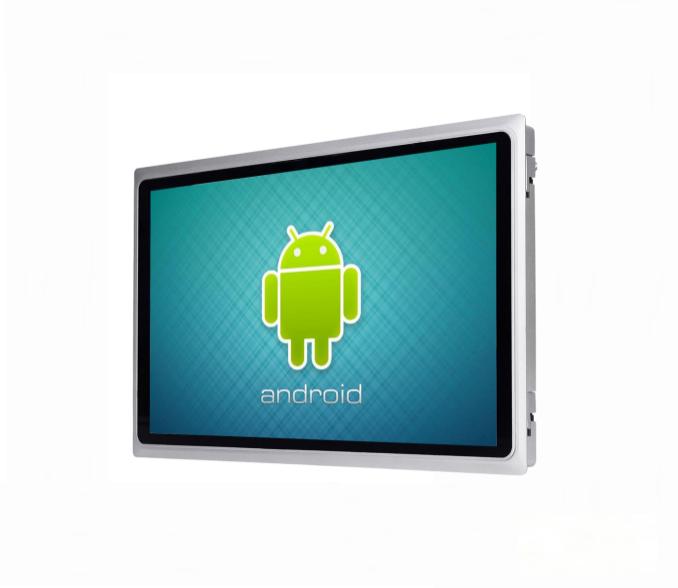
A Fanless Android Panel PC seamlessly merges an industrial-grade touchscreen interface with a rugged, passively cooled enclosure. It acts as the ultimate terminal for factory floors, self-service kiosks, and smart facility automation.
While fanless systems typically carry a higher initial procurement cost, they yield a significantly lower Total Cost of Ownership over their lifecycle due to near-zero maintenance requirements and extended operational longevity.
Final hardware selection hinges on strict variables. You must evaluate the operating environment, processing demands, I/O connectivity, mounting constraints, operating system preference, and long-term budget.
Current market analyses of the industrial PC sector reveal a decisive pivot toward edge computing. As facilities integrate thousands of IIoT sensors, the demand for decentralized processing directly on the hostile factory floor has surged. Industry analysts note that these edge environments are inherently unforgiving to traditional IT hardware.
Consequently, passive cooling architectures are rapidly outpacing active cooling in year-over-year adoption rates. Plant managers are realizing that bringing computing power closer to the machine level requires hardware that can survive oil mists, intense vibrations, and fluctuating temperatures without constant IT supervision. This macro trend is driving the widespread standardization of fanless terminals across global manufacturing hubs.
To make an informed purchasing decision, it is essential to grasp the fundamental thermodynamics at play. Processors generate intense heat under heavy computational loads. If this thermal energy is not managed correctly, the CPU will engage in thermal throttling. This deliberate slowing down prevents catastrophic melting but instantly degrades system performance.
Fan-cooled systems rely on a concept known as active cooling. In this traditional architecture, internal mechanical fans continuously pull cool ambient air into the chassis while forcefully exhausting hot air out. This constant airflow moves directly over the Central Processing Unit and other heat-generating motherboard components, ensuring internal temperatures remain within safe operating thresholds.
While this method is highly effective for chilling powerful processors, it introduces a severe mechanical vulnerability. The continuous airflow creates a vacuum effect. In a pristine server room, this is fine. However, on a bustling factory floor, this vacuum pulls in airborne particulate matter. Dust, conductive metallic shavings, and corrosive chemical vapors are drawn directly onto sensitive electronics. This inevitably leads to short circuits or suffocating thermal blankets when the fans clog and fail.
In contrast, fanless technology operates on the elegant principle of passive cooling. Instead of relying on vulnerable mechanical fans to circulate air, a fanless PC utilizes advanced thermodynamics and specialized chassis engineering. The outer casing of the computer is frequently constructed from heavy-duty extruded aluminum featuring deep thermal fins. This entire outer shell acts as a giant, continuous heat sink.
Internally, copper heat pipes and thermally conductive pads draw heat directly away from the processor. This heat is transferred to the external aluminum shell, where it dissipates naturally into the surrounding ambient air. By removing the need for ventilation, engineers can completely seal the system. This closed-loop design hermetically isolates delicate internal electronics from aggressive external contaminants, drastically elevating overall hardware reliability.
When evaluating these two architectures side-by-side, the contrasts in operational capability become stark. Below is a direct comparison of the critical engineering metrics that dictate field performance.
Engineering Metric | Fanless Industrial PC | Fan-Cooled Industrial PC |
|---|---|---|
Cooling Mechanism | Passive conduction via aluminum chassis and heat pipes. | Active convection via mechanical fans and ventilation holes. |
Moving Parts | Zero. Fully solid-state design. | Multiple. Fans and potentially spinning hard drives. |
Ingress Protection | High. Often IP65 or IP67 rated against dust and water. | Low. Vulnerable to airborne particles and moisture. |
Maintenance Need | Near zero. Install and forget. | High. Requires frequent filter cleaning and fan replacement. |
Ideal Environment | Harsh factory floors, outdoor kiosks, high-vibration vehicles. | Clean rooms, climate-controlled server racks, offices. |
Despite the rapid advancements in passive cooling, traditional fan-cooled systems still occupy a necessary niche within the broader industrial computing landscape. Acknowledging their specific strengths and limitations is key to a successful deployment.
The primary advantage of active cooling lies in its raw thermal capacity. Fan-cooled systems can comfortably house power-hungry, top-tier processors such as Intel Core i7 or i9 series, alongside dedicated GPUs. This makes them indispensable for complex edge applications demanding massive data processing. Centralized control room servers or high-speed optical quality inspection lines rely heavily on this raw power. Furthermore, because they utilize mass-produced standard cooling components, their initial acquisition cost is typically lower.
However, their reliance on continuous airflow remains their greatest Achilles' heel in harsh settings. Fan-cooled PCs are highly vulnerable to moisture ingress, airborne flour dust in bakeries, and conductive metal shavings in machine shops. They suffer from single-point mechanical vulnerabilities. The moment a cooling fan dies, the CPU overheats and forces a hard system shutdown. Additionally, these systems are strictly prohibited in sterile environments like pharmaceutical cleanrooms because the fans actively agitate and circulate potential pathogens into the air.
For the vast majority of modern factory automation, IoT edge deployments, and interactive HMI applications, the migration toward passive cooling is driven by operational superiority.
Because they completely eliminate ventilation holes, fanless designs empower manufacturers to achieve stringent Ingress Protection ratings. A meticulously engineered fanless PC can secure IP65, IP67, or even IP69K certifications. Practically, this means the external chassis is totally impervious to microscopic dust particles and can endure low-pressure water jets, aggressive chemical washdowns, or full liquid submersion. This level of armor is non-negotiable in the food and beverage industry, where daily high-pressure sanitation is mandatory.
In addition, mechanical fans generate a constant, droning acoustic noise. While negligible on a loud manufacturing floor, it is a critical disruption in other professional arenas. Fanless PCs deliver completely silent operation. This zero-noise footprint makes them highly sought after for deployment in medical laboratories, hospital operating theaters, broadcast recording studios, and quiet library archival kiosks.
Freed from the volumetric burden of bulky cooling fans and internal airflow channels, engineers can design fanless PCs to be remarkably ultra-compact. These small-footprint devices effortlessly integrate into cramped electrical control cabinets. They mount easily onto DIN-rails alongside PLCs or embed directly inside Automated Guided Vehicles where physical real estate is at an absolute premium.
Human-Machine Interfaces act as the vital communication bridge between human operators and automated machinery. In recent years, a highly specific hybrid device has disrupted this sector, offering unprecedented flexibility and durability.
This unit is an integrated, all-in-one powerhouse. It fuses a rugged, passively cooled industrial computer with a high-definition, industrial-grade capacitive touchscreen display. Rather than running bloated desktop operating systems, these terminals are driven by the Android OS, operating on highly efficient ARM-based processors. The result is a device that is exceptionally durable, instantly responsive to touch gestures, and optimized for continuous, low-power operation.
For facility managers looking to modernize their operational interfaces, deploying a solution like the 15.6" Fanless Android Panel PC TPRO-ARM156 strikes the perfect equilibrium. Looking at the core specifications of such devices reveals exactly why they are favored by engineers. They typically feature a true-flat IP65 front panel, preventing water and dust from seeping into the screen edges. Powered by robust ARM architecture, they generate minimal heat, making them the perfect candidate for completely sealed enclosures. Furthermore, the 15.6-inch widescreen format provides ample real estate for complex SCADA dashboards while remaining compact enough for swing-arm mounting.
Android has rapidly ascended as a preferred operating system in industrial environments. Its open-source nature, absence of expensive Windows licensing fees, and app-centric ecosystem make it incredibly versatile. Software engineers can rapidly develop and deploy custom APKs tailored for proprietary HMI dashboards, real-time inventory tracking systems, and intuitive machine control interfaces.
Procuring the appropriate industrial computer requires a systematic evaluation of your specific operational realities. Use the following criteria as an actionable buyer's checklist to avoid costly specification errors on the factory floor.
Assess the Operating Environment: Inspect the physical installation site. Is there a high concentration of airborne oils, moisture, or dust? Are there significant vibrations from nearby stamping presses? If yes, a fanless system is structurally mandated to prevent premature failure.
Evaluate Processing Power: Define the software workload. If the device primarily runs basic HMI applications, data logging, or web-based dashboards, an ARM-based fanless system is perfectly sufficient. If the workload involves heavy 3D CAD rendering, an actively cooled system may be required.
Verify Legacy Connectivity: Industrial environments frequently rely on older machinery. Ensure the chosen PC possesses the necessary I/O configurations. Look for RS232 or RS485 COM ports, dual Gigabit LAN for network redundancy, and GPIO interfaces for direct sensor integration.
Determine Mounting Constraints: Plan the physical installation method. Does the application require a standard VESA 75/100 mount for a swing arm, a panel mount for flush integration into a cabinet door, or a DIN-rail mount for a control box?
Align the Operating System: Match the OS with your software ecosystem. Windows remains standard for legacy applications, while Linux offers high stability for embedded systems. Android provides unparalleled flexibility and lower costs for custom UI and touchscreen-centric HMI deployments.
Calculate Long-Term ROI: Resist the urge to make decisions based solely on the initial hardware sticker price. Weigh the upfront cost against the devastating financial losses associated with production downtime, ongoing IT maintenance labor, and frequent hardware replacement cycles.
To further clarify the decision-making process, it is highly instructive to observe how different sectors successfully deploy these distinct technologies based on their environmental constraints.
Active cooling systems belong in environments where the air quality is strictly controlled and the ambient temperature is regulated. They excel in climate-controlled server rooms, indoor telecommunications racks, and clean-room manufacturing facilities like semiconductor fabrication. They remain the standard choice for centralized control rooms where heavy data aggregation and complex multi-monitor processing are required, safely isolated from the harsh factory floor.
In contrast, passive cooling systems are designed for the tactical edge of the network, positioned directly in the line of fire. They are the superior choice for sawmills and woodworking shops where sawdust clogs standard electronics in mere hours. They thrive on CNC machining floors amidst oil mists and metallic debris. Acting as recipe management screens, a rugged Fanless Android Panel PC can easily withstand daily chemical washdowns on food and beverage lines without short-circuiting. Furthermore, their inherent vibration resistance makes them the absolute standard for forklift-mounted warehouse terminals and outdoor digital signage where systems must endure constant physical shock.
The industrial computing landscape is defined by an ongoing, relentless battle against harsh environmental variables. While traditional fan-cooled PCs maintain a necessary role in high-performance, climate-controlled data centers, the broader industrial sector is rapidly and decisively shifting toward passive cooling architectures.
For the vast majority of factory floor applications, IoT edge deployments, and interactive HMI terminals, the elimination of moving parts translates directly to increased operational stability. By shielding sensitive internal components from dust, moisture, and vibration, fanless systems offer a pragmatic, zero-maintenance solution that actively protects your bottom line. When evaluating upgrades to your automation infrastructure, prioritizing industrial-grade Fanless Android Panel PC solutions at Vincanwo Group is a highly prudent strategy to future-proof daily operations and permanently minimize costly production downtime.
While it is completely normal for the exterior of a fanless PC to feel warm to the touch, they are highly unlikely to overheat when used within their specified parameters. The aluminum chassis itself acts as a giant heat sink pulling thermal energy away from the CPU. These systems are purposefully engineered with low-power components such as ARM processors and built-in thermal throttling safeguards. As long as the device is operated within its rated temperature zone, often reaching 60°C or 70°C, and has basic ambient air clearance for natural heat dissipation, overheating is not a practical concern.
In terms of the initial procurement price, yes. Fanless systems require specialized thermal engineering, premium conductive materials, and custom extruded aluminum chassis, which naturally drives up the manufacturing cost. However, when evaluating the Total Cost of Ownership, fanless PCs are significantly more cost-effective. They entirely eliminate the labor costs associated with cleaning filters, replacing dead fans, and mitigating the expensive production downtime caused by preventable hardware failures.
Empirical industry data suggests that a high-quality fanless industrial PC can reliably operate for 5 to 7 years, or even longer, under continuous 24/7 operation. Because they utilize solid-state components and completely lack mechanical fans, the Mean Time Between Failures is exceptionally high. In stark contrast, commercial fan-cooled PCs deployed in similar harsh industrial conditions typically experience fatal mechanical or thermal failure within 2 to 3 years.
Consumer tablets are built for lightweight, intermittent use in clean environments. They feature fragile glass screens, plastic enclosures, and internal batteries that degrade rapidly under constant charge. An industrial panel PC is engineered for continuous 24/7 operation. They utilize heavy-duty aluminum housings, IP-rated waterproof front bezels, wide-temperature industrial grade components, and extensive legacy I/O ports like RS232 to communicate directly with factory machinery.
Absolutely. In fact, passive cooling is specifically designed for uninterrupted, round-the-clock operation. Because there are no mechanical fans to wear out or bearings to fail, a fanless system can run continuously for years. The thermal dissipation relies entirely on physics and material science rather than moving parts, ensuring perfectly stable cooling regardless of how many hours the machine has been running.
Yes. The Android operating system is fundamentally open-source and highly customizable, making it an excellent, agile platform for proprietary industrial applications. Developers can easily write and deploy custom APKs for machine control, inventory tracking, or bespoke HMI dashboards. Furthermore, Android allows system administrators to lock the device into Kiosk Mode. This restricts the operator's access to a single dedicated application, ensuring absolute system stability and preventing unauthorized use or accidental settings modifications.


